
Why I Bought These Books
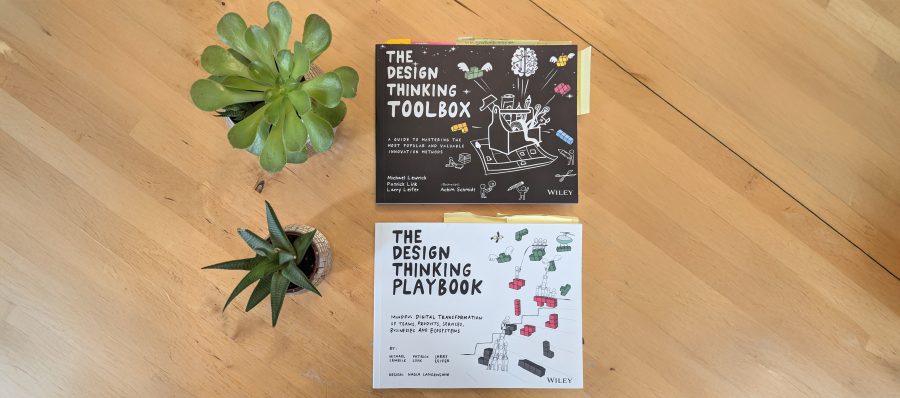
If I’m remembering correctly, like most of the good books in my life, I first checked The Design Thinking Toolbox out of the library. I didn’t necessarily expect much, mostly just a quick skim for ideas. But I found myself bookmarking pages, jotting down thoughts on sticky notes, and eventually admitting the obvious: I needed to own it. And if I was going to own it, I might as well get The Design Thinking Playbook too.
These books became part of my early days building the Discovery function at Veracyte. One of the first clear priorities I was given was to design an “Innovation Day” — which I immediately rebranded as Discovery Day. “Innovation” belongs to everyone, and I didn’t want a single team cornering that territory. Discovery, on the other hand, is an invitation.
The event eventually became an annual gathering of leaders from across our globally distributed organization: a chance to explore the trends shaping the future of diagnostics and translate those insights into Discovery priorities for the year ahead.
But in those first few weeks, all I knew was this: If people were going to fly across the world to sit in a room together, we couldn’t have them passively listen. The day had to be interactive. Engaging. Alive.
So I turned to design thinking for inspiration, and these books delivered.
They gave me concrete ideas for workshops, facilitation frameworks, and hands-on ways of bringing people into the conversation. They reminded me how to separate divergent and convergent thinking so we didn’t collapse creativity before it could breathe. They helped me draw out voices from across functions and levels, and design an experience that felt energizing rather than performative.
And the influence didn’t stop at Discovery Day.
What Design Thinking Means in My Leadership
Design thinking has become one of the engines of how I lead.
At its core, design thinking gives me a disciplined way to bring people together around complex problems. Not to perform collaboration, but to practice it. It pushes me to create rooms where people feel invited in, where ideas can breathe, and where we resist the urge to collapse creativity too quickly.
It’s also a structural reminder: explore before you evaluate; diverge before you converge; listen before you decide. That sequence has shaped how I architect conversations, how I build alignment across functions, and how I design cultures that don’t default to the loudest voice in the room.
It’s not about sticky notes.
It’s about designing practices and systems that surface insight, reduce fear, and make it easier for people to see what’s possible together.