
Leadership in Biotech

Tag: team dynamics

Four coworkers sit at a table looking at a laptop together. They are happy and enjoying the interaction

Case Studies in Connection: Design for Belonging

Belonging doesn’t just happen, it’s designed through the routines that shape how teams work together.

One of our simplest, most consistent rituals is that we start every team meeting with a short “About Me” from a rotating member. It’s two minutes, one slide, sometimes a photo. Over time, it’s transformed us from a collection of experts into a community of known people.

We know whose kid just started a new school, who’s training for a triathlon, whose garden is exploding with chile peppers. We even discovered an improbable number of birders on our team this way. These details accumulate into trust.

Another anchor is our annual culture and operating-rhythm review. Once a year we pause to ask:

  • Are our meetings effective?
  • Are we working on the right things?
  • Do our shared values still guide us?

Then we commit to concrete changes based on what we discuss. Sometimes that means reworking meeting cadence, clarifying decision roles, or adding new rituals.

Building shared practices

Here’s what’s important: these practices weren’t decreed from the top. The idea for “About Me” came from the team itself. And while I create the space for our annual review, I haven’t led the session for the past two years, team members have. Culture in our team is not a leadership initiative, it’s a shared ethos that everyone owns and shapes.

AI could quietly strengthen practices like these by:

  • Sense-making: surfacing themes across culture check-ins and feedback.
  • Memory: tracking commitments and reminding teams months later what’s evolved.
  • Support: suggesting new “About Me” prompts or reflections to keep stories fresh and inclusive.

Connection scales when it’s built into the way we work, not as something extra, and not as something handed down, but as the operating system we all help maintain.

Question for you: What’s one small practice your team repeats that quietly turns strangers into collaborators?


Close up of three people's hands as they use two laptops at a glass table

Case Studies in Connection: Designing Collaboration to Build Trust

When we rolled out GenAI at Veracyte, we didn’t cluster people by department. Instead, we formed peer-led learning groups around use cases:

  • Writing and editing
  • Coaching and feedback
  • Brainstorming and ideation
  • Data privacy and governance

Over six weeks, each group honed its particular use case and shared tips in real time. People definitely got better at using the tools, but something even more powerful happened alongside the skill-building.

New connections sparked across the company

Scientists were suddenly learning from sales reps. Legal and customer care were comparing notes on data privacy. Folks who had never spoken before started to understand each other’s struggles, frustrations, and sources of joy.

By designing collaboration around shared problems instead of org charts, we unlocked trust and empathy. The highlight for many participants — according to our post-program survey — wasn’t just new GenAI skills, it was the relationships and perspective they gained.

That’s the hidden power of collaboration-by-design:

  • Trust builds faster when people tackle real challenges together.
  • Boundaries soften when connections cross silos.
  • Innovation compounds when people see the bigger picture of the work.

AI was the reason we gathered, but connection was the outcome. And in a world where loneliness is a quiet threat to performance, those connections may be the most enduring thing we built.

Question for you: How do you design collaborations in your org so they intentionally build trust — not just output?

Close-up photo of a person's hands as they use their laptop. Next to the laptop is a coffee mug with an "infinity peanut" logo printed on the side

Case Studies in Connection: Shared Identity in Action

At our recent team onsite in San Diego, the agenda wasn’t shaped around big dinners or polished presentations. When we asked the group what they wanted to do together, the answers were rituals we’d loved before and wanted to keep alive:

  • Infinity peanut (our design-thinking infinity loop exercise).
  • Pictionary Telephone (aka Eat Poop You Cat 🙃).
  • Team tee shirts.

On the surface, these are silly traditions, but they actually carry a lot of weight. The bad drawings from Pictionary Telephone now hang as office art. The tees feel like a uniform of belonging (it makes me smile every time I see someone in a meeting wearing a team tee). Even the infinity peanut loops back as a reminder of how we think and work together.

They’re fun, yes — but they’re also statements of identity:

  • We co-create our experiences.
  • We take the work seriously, but we don’t take ourselves too seriously.
  • We’re willing to look a little ridiculous in service of connection and learning.
  • We remember and retell our stories.

That’s the key: the rituals only become culture when the stories and artifacts keep them alive.

Here’s where I see AI being helpful. At Veracyte, I’ve already seen people use GenAI to generate artwork and slogans for peer-led learning groups during our initial GenAI rollout. It turned participation into artifacts that reinforced the group’s identity.

Imagine AI as a culture co-pilot:

  • Turning silly hand drawings into tee-shirt or sticker designs (no graphic designer required).
  • Weaving micro-stories from team rituals into onboarding packets or thank-you notes.
  • Resurfacing shared jokes and touchstones at milestones so the culture “remembers itself.”

The tech doesn’t replace the ritual. It helps the meaning stick.

Question for you: What’s one team ritual you’d love to see preserved, retold, or reimagined with a little AI help?

A woman sits at a glossy office table with empty seats around her while she sips a take-out coffee and looks at her laptop

Loneliness Is Reshaping Your Workplace

My third HBR article just dropped today, available here: Loneliness Is Reshaping Your Workplace.

This piece was sparked by a keynote I heard a year ago from former U.S. Surgeon General Dr. Vivek Murthy, who spoke powerfully about the crisis of loneliness at the Stanford University Big Ideas in Medicine Conference. As I listened, I realized that loneliness isn’t just a societal issue—it’s reshaping our workplaces in subtle but profound ways. It’s showing up in how we collaborate, how we show up for each other, and how we find meaning in our work.

There’s little debate that loneliness is on the rise, driven by sweeping societal and technological shifts. The casual, connective moments that once defined our day-to-day lives have been eroded by a rise in frequent but shallow digital interactions—leaving many feeling more isolated than ever.

These dynamics inevitably shape the workplace. They seep into team culture, performance expectations, and everyday interactions. Work doesn’t exist apart from society—it absorbs its pressures, amplifies its gaps, and remains one of the last places where people hope to feel like they matter.

But this moment also presents an opportunity: for leaders and organizations to make work more meaningful, more human, and more sustaining.

I’d love to hear your thoughts in the discussion on LinkedIn:

  • What are the moments of connection that have mattered most in your work?
  • How are you seeing loneliness show up in your workplace?
  • What do you see leaders doing to address it?

Shout out to my amazing co-author and friend Luis Velasquez MBA, PhD. ❤️

Check out my recent appearance on the Successful Nonprofits podcast, hosted by Dolph Goldenburg. My co-author, Luis Velasquez, and I were interviewed about our HBR article that examined the potential pitfalls of being an “umbrella manager.” There’s lots of good discussion, including background about how the article came to be, as well as advice on how managers can avoid the trap of over-protecting their teams. Check out the podcast here, and if you missed it, read the article here.

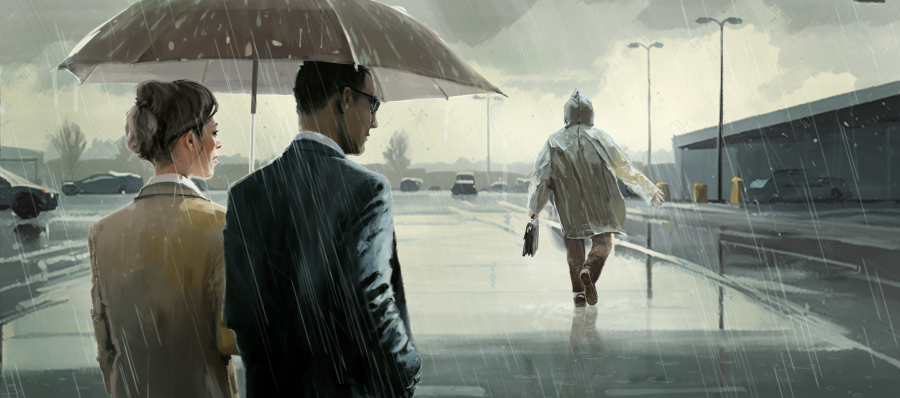
A digital painting of two people standing under an umbrella in the rain, longingly watching a third person walking along in a rain poncho

My amazing friend (and former coach) Luis Velasquez MBA, PhD. and I wrote an article for HBR about “umbrella managers,” or leaders who believe it is their job to protect their team from organizational challenges to the detriment of themselves, their teams, and their organizations. The article outlines the mental shifts and specific actions that can help umbrella managers let go of the need to protect their team and start supporting them.

In the last 6 years I have had the privilege of mentoring a number of new managers (and managers of managers) on my team. The tendency to ‘protect’ is strong, especially in high stress work environments- I should know, because I am a former umbrella manager.

Please check out “How to Equip Your Team Problem Solve Without You” at Harvard Business Review, and let me know your thoughts in the comments.

Powered by WordPress & Theme by Anders Norén