Leadership in Biotech

Tag: ai Page 2 of 3

Illustration of a desk with a figure from a recent paper about Virtual Cell Grammar

Readable Rules, Testable Models: A New Grammar for Virtual Cells

Virtual Cell Models are all the rage right now, and this week’s AI ∩ Bio paper covers one recent paper that aims to democratize this approach by encoding complex multicellular dynamics in plain language.

This paper introduces a plain-language “cell behavior hypothesis grammar” that turns rules like “oxygen decreases necrosis” into executable agent-based models. The aim is to let researchers build virtual experiments directly from human-readable statements, initialize them with single-cell or spatial data, and test how cell–cell and tissue dynamics unfold.
Why it matters: it makes modeling more accessible, assumptions more transparent, and experiments easier to prioritize.

Scientific Insight

At its core, the grammar provides dictionaries of signals (what cells sense) and behaviors (what cells do), plus simple response forms, so a one-line rule becomes math the simulator can execute. The paper shows this through diverse examples: hypoxic tumor growth, PDAC invasion seeded from Visium data, tumor–immune dynamics, an EGF “go vs. grow” test validated with organoids and cell tracking, and cortical layer formation modeled from asymmetric division rules.

If you’re new to this, the big idea is: start with rules you can read, tie parameters to data where possible, and test which parameters truly drive outcomes.

Leadership Angle

For diagnostics and translational leaders, this work is a pragmatic step toward virtual cell laboratories: models initialized from tissue data can be used to explore therapy combinations and microenvironmental dynamics before committing wet-lab time. The scope is still local-tissue, not clinical, but when used carefully these grammars act as prioritization engines, or tools to sharpen questions and rank hypotheses.

Lessons for Early-Career Scientists

If you’re early in your career, I would consider two lessons here.

  • First, write the biological models down explicitly, framing for yourself how outcomes shift when parameters are perturbed.
  • Second, design experiments that rigorously interrogate these models: not to confirm them, but to expose where they fail.

Transparent rulebooks, sensitivity analyses, and reproducible code will accelerate your science regardless of your toolkit.

Virtual Cell Grammar formalizes implicit scientific thinking, but its value ultimately depends on how it’s used to design falsifiable experiments.

Illustration of a desk with a figure from a recent paper about OncoGAN

OncoGAN Creates Synthetic Cancer Genomes, Opening New Paths for Privacy-Preserving Precision Oncology

This week’s AI ∩ Bio paper covers a recent Cell Genomics paper from the labs of Bo Wang and Lincoln Stein entitled “In silico generation of synthetic cancer genomes using generative AI.”

Summary

Cancer genomics has exploded in the past decade thanks to projects like TCGA and PCAWG, which have sequenced tens of thousands of tumors. These datasets power today’s precision oncology, but they come with a problem: strict privacy rules and limited access mean that few genomes can be freely shared. Enter OncoGAN—a new generative AI framework that creates realistic, privacy-preserving synthetic cancer genomes. Published in Cell Genomics, the study shows how AI can simulate tumor-specific mutation patterns in a way that is both biologically faithful and openly shareable.

Scientific Insight

OncoGAN works by combining different deep learning approaches to generate synthetic genomes that capture point mutations, copy number alterations, and structural variants across eight tumor types. The synthetic genomes successfully reproduce hallmark features such as tobacco- and UV-related mutational signatures, tissue-specific mutation densities, and known driver gene patterns. When tested, these “digital tumors” performed nearly identically to real samples in downstream algorithms like driver detection and tumor-of-origin classification. Importantly, mixing synthetic and real genomes slightly boosted the accuracy of a tumor-type prediction tool—especially for rare cancers where training data is scarce.

Leadership Angle

For diagnostics and biotech organizations, this paper provides a glimpse of how synthetic data can accelerate tool development while navigating the privacy and access barriers that have hounded cancer genomics for years. Synthetic cohorts could help level the playing field for rare cancers, allow fairer benchmarking across companies, and speed up early R&D. The caution: these datasets are complements, not substitutes—real clinical validation remains essential. Leaders should ask not just can we use synthetic data, but where in our pipeline does it add value without creating risk.

Mentorship Angle

For early-career scientists, this paper is a reminder that technical brilliance isn’t enough. The OncoGAN team shows three habits worth emulating: they (1) designed with interoperability in mind—outputs are in standard formats like VCF; (2) validated their models with external tools, not just their own metrics; and (3) openly stated limitations, from missing low-frequency signatures to not yet modeling subclones. These are the practices that build credibility in science. If you’re starting out, take this as encouragement: your career impact may come not from the flashiest model, but from building rigorous, shareable, and honest tools that push the whole field forward.

Deeper Look

Opportunities to Extend and Deepen the Impact of OncoGAN

The OncoGAN framework marks a timely and technically rigorous advance in synthetic genome generation for cancer research. By combining a variational autoencoder (VAE) and generative adversarial network (GAN), the authors trained on over 23,000 whole-genome sequenced tumor samples to produce synthetic genomes that mimic somatic mutations, copy number alterations, and structural variants across multiple cancer types. This offers a promising route toward generating shareable, privacy-preserving datasets for algorithm development and benchmarking in precision oncology.

That foundation is strong. But to fully realize the promise of OncoGAN—not just as a statistical mimic, but as a biologically faithful tool—several opportunities for deeper analysis and refinement remain.

Interpretable Latent Space Structure

The model’s latent space—where high-dimensional genomic data are compressed into abstract representations—has not been probed for biological meaning. At present, it’s unclear whether the model learns known biological axes of variation (e.g., DNA repair deficiency, chromosomal instability) or simply dominant data trends.

Opportunity: Apply dimensionality reduction (e.g., UMAP) or clustering to the latent vectors and examine whether tumor types, mutation burdens, or known pathways segregate. Interpreting this space could help move OncoGAN from a black-box generator to a tool for uncovering latent structure in cancer genomes.

Regional and Feature-Level Fidelity

Real cancer genomes are heterogeneous—not just across samples, but across regions within each genome. Coding regions, for example, are typically lower entropy and more functionally constrained than intergenic areas, making them easier to learn. Conversely, complex rearrangement zones or repetitive elements may be under-modeled or blurred by the VAE’s compression.

Opportunity: Assess region-specific reconstruction accuracy (e.g., exons vs. telomeric regions) and mutation-type fidelity (e.g., SNVs vs. large structural variants). This would clarify whether OncoGAN preserves biologically important regions or smooths over hard-to-model areas.

Network-Based Validation of Biological Structure

Cancer evolution isn’t random; it follows structured trajectories involving co-occurring and mutually exclusive mutations, often within pathways. These patterns can be lost in aggregate summary statistics.

Opportunity: Construct mutation co-occurrence or pathway activation networks from synthetic genomes and compare them to networks from real tumors. Similar network topology would suggest that OncoGAN learns the structure of cancer mutagenesis—not just global frequencies.

Contrastive Modeling with Non-Cancer Genomes

Currently, the model is trained only on tumor samples. This makes it difficult to determine whether OncoGAN captures tumor-specific signals or just generic mutation distributions.

Opportunity: Incorporate healthy genomes as a contrastive class during training or evaluation. This would allow testing whether synthetic tumors retain discriminative features—e.g., chromosomal instability, elevated mutational signatures—that distinguish cancer genomes from background variation.

Modeling and Filtering of Assay Artifacts

Real sequencing data contain technical noise—from FFPE-induced damage to platform- and batch-specific artifacts—that can be inadvertently incorporated into the training signal. Without careful handling, OncoGAN may learn and reproduce these artifacts as if they were biological features.

Additionally, if the model is trained on processed variant calls (rather than raw sequencing reads), it may inherit systematic biases from upstream bioinformatics pipelines. Regions of the genome that are hard to map, structurally complex, or artifact-prone—such as repetitive elements and telomeric regions—are often underrepresented or excluded entirely. These biases can subtly shape the generative model’s internal assumptions about what defines a “typical” cancer genome.

Opportunity: Include artifact-aware preprocessing, noise injection modeling, or explicit de-noising during training. Downstream validation should also check whether known artifacts (e.g., C>T errors from FFPE deamination) are overrepresented in synthetic genomes. Future directions could also explore alignment-free or graph-based genomic representations to mitigate inherited limitations from short-read pipelines.

Sample Size Sufficiency and Model Saturation

While 23,000 genomes is a large training set, the field lacks evidence that this sample size captures the full spectrum of tumor heterogeneity—or that OncoGAN has reached its capacity limits.

Opportunity: Perform downsampling analyses and learning curves to test when performance saturates. This would clarify how many samples are needed to generate reliable synthetic genomes across both common and rare tumor types.

Closing Note

OncoGAN offers a scalable, technically impressive solution to a pressing problem in cancer genomics. The next step is to elevate it from a tool that statistically resembles real data to one that biologically recapitulates the processes and structures that drive tumor evolution. Doing so will make it not just a data-sharing tool—but a discovery engine.


Illustration of a desk with a figure from a recent paper about Rentosertib

Hype, Hurdles, and Hepatotoxicity: A Bold Step for AI-Designed Drugs, But Still Miles to Go

This week’s AI ∩ Bio: Reading the Revolution paper spotlights the first randomized Phase 2a trial of a drug discovered using generative AI.

Summary and Context

The trial investigates rentosertib, a small-molecule inhibitor of TNIK (Traf2- and Nck-interacting kinase), developed end-to-end on Insilico’s AI platform. Notably, the system identified both the target and compound de novo—compressing two traditionally distinct phases of drug discovery into a unified AI-led workflow.

The study enrolled patients with idiopathic pulmonary fibrosis (IPF)—a progressive, fatal lung disease with no cure. This trial sets a bold precedent: Can a molecule born of algorithms succeed in one of medicine’s most unforgiving indications?

Scientific Insights & Critical Observations

What’s Promising

  • AI-led discovery pipeline: TNIK identified and rentosertib designed via Insilico’s generative model.
  • Accelerated early development: Reached Phase 2a enrollment in under 30 months from target nomination.
  • Biomarker engagement: Downregulation of fibrosis-linked proteins (e.g., COL1A1, MMP10, FAP) with exploratory ties to lung function improvement.

What’s Concerning

  • Overinterpretation of early signals: The +98.4 mL FVC gain in the 60 mg arm was non-significant, with one-third of patients missing spirometry at Week 12.
  • Safety flags: Hepatotoxicity led to multiple discontinuations, particularly in patients co-treated with nintedanib—a standard-of-care antifibrotic—with an unexplored drug–drug interaction risk.
  • Pharmacokinetics: High interpatient variability and disproportionate exposure increases raise questions about dose optimization.
  • Generalizability: All 71 patients were Asian and enrolled in China, limiting extrapolation across diverse IPF populations.
  • Narrative overreach: The AI platform is being validated rhetorically more than pharmacologically—so far.

A Useful Comparison

To contextualize this AI-driven advance, consider nintedanib—a first-in-class oral tyrosine kinase inhibitor targeting PDGFR, FGFR, and VEGFR. It was the first drug to significantly slow lung function decline in IPF in large, well-controlled trials, establishing antifibrotic therapy as a treatment paradigm.

FeatureRentosertib (AI, Phase 2a, 2025)Nintedanib (Traditional, Phase 2 results in 2011- below; Approved c2014)
Discovery speed~30 months to Phase 2a~10+ years
Target noveltyFirst-in-class (TNIK)Known pro-fibrotic RTKs
Phase II trial size71 patients432 patients
Efficacy signalWeak, non-significantStatistically significant
Safety profileHepatotoxicity, DDI with nintedanibPredictable, tolerable
Trial population diversitySingle-country, homogeneous cohortGlobal, multi-ethnic
Biomarker integrationProteomics exploredFocused on validated clinical endpoints

Takeaway for Early-Career Scientists

This is a milestone in ambition, not yet in outcome.
Rentosertib shows what generative AI can compress in timeline—but not what it can yet deliver in therapeutic benefit. The real test isn’t how a drug is designed, but how it performs in humans.

So ask yourself: If this same molecule came from a traditional screen, would we be touting it—or shelving it?

Generative AI may change how we create drugs, but it doesn’t change what success looks like.

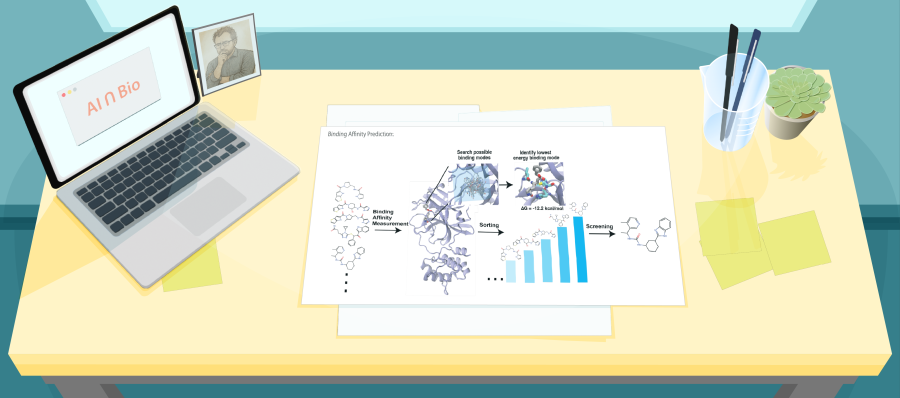
Illustration of a desk with a figure from a recent paper about binding affinity predictions

Beyond Binding: Rethinking Drug Design in the Age of AI and Structural Biology

In molecular design, we often prioritize what’s measurable over what’s meaningful.

For decades, binding affinity has served as a cornerstone of early-stage drug discovery, not because it captures biological function in full, but because it’s one of the few properties we can quantify systematically and optimize across large libraries.

Now, as AI models generate binders faster than we can validate them, we must ask: What exactly are we optimizing for? And what datasets are we training on?

What we know:

  • Strong binding doesn’t guarantee efficacy
  • Residence time and conformational flexibility can matter more than affinity
  • Cellular context — target expression, pathway crosstalk, and off-target interactions — often dictates outcome in clinical applications

Yet much of the public data — and many AI training sets — still orbit around Kd, IC₅₀, and docking scores. These are abundant and easy to label, but they capture only a narrow slice of pharmacological reality (and we’re not even accounting for the fact that these measurements are highly dependent on the specific conditions- buffer, temperature, etc).

If we train models on what’s easy to measure, we shouldn’t be surprised when they generate molecules that impress in silico — and disappoint in vivo.

The problem isn’t that binding doesn’t matter. It does. The problem is that binding isn’t biology.

Toward More Meaningful Models

To do better, we’ll need to:

  • Incorporate multi-parametric data: kinetics, permeability, metabolism, toxicity, immune activation
  • Train models to include mechanism and uncertainty, not just affinity
  • Elevate datasets that link structure to systems, not just structure to scores

The best work ahead won’t just generate molecules; it will surface better models about how they work, and where they fail in the journey from discovery to clinic.

Boltz-2: How much can 3D structure really tell us about molecular binding energetics?

This week’s AI ∩ Bio: Reading the Revolution series covers Boltz-2, a new structural biology foundation model that exhibits strong performance for both structure and affinity prediction.

To put this work in context, let’s start with the classic protein modeling pipeline logic:
🧬 Sequence → 🧱 Structure → 🎯 Function

AlphaFold revolutionized the first step, grounded in the premise that function follows from structure. Boltz-2 puts that premise to the test. It starts at the middle of the pipeline — with the 3D structure of a protein–ligand complex — and asks: Can we predict binding affinity using only geometry?

Structure is signal

Boltz-2 is a deep learning model that predicts binding affinity directly from 3D geometry — no sequence, no docking scores, no molecular dynamics.
It learns by:

  • Using real 3D snapshots of protein–ligand complexes from experiments (via the PDBBind database) as “correct” examples
  • Comparing them to incorrect or nonbinding versions (decoys)
  • Teaching itself to distinguish between the two by assigning higher scores to the true binders — a method called contrastive learning
  • Viewing each complex from multiple angles and modeling how atoms interact using cross-attention between the ligand and protein

The result? Accuracy approaching Free Energy Perturbation (FEP) — a gold-standard physics-based method — at a fraction of the computational cost. So if you have the correct structure, you can get binding affinity. But that’s the tradeoff.

Boltz-2 doesn’t predict binding sites. It doesn’t model flexible loops or conformational dynamics. It assumes the structure is already known — and that it’s accurate. But we know that:

  • Crystallography can trap proteins in inactive states
  • Ligand poses may not reflect behavior in solution
  • Flexibility is collapsed into a single static frame

Still, Boltz-2 shows how much signal is embedded in structure — when that structure is right.


Reflection for Early-Career Scientists

What happens when you flip the framing? Instead of building up from sequence to structure to function, Boltz-2 works from the middle, assuming structure is known, and asking how far that alone can take you. As a result, Boltz-2 sharpens the boundary of what structure can predict — and what it can’t. In other words, Boltz-2 is a boundary marker: a way to measure what’s possible if geometry is complete and correct.

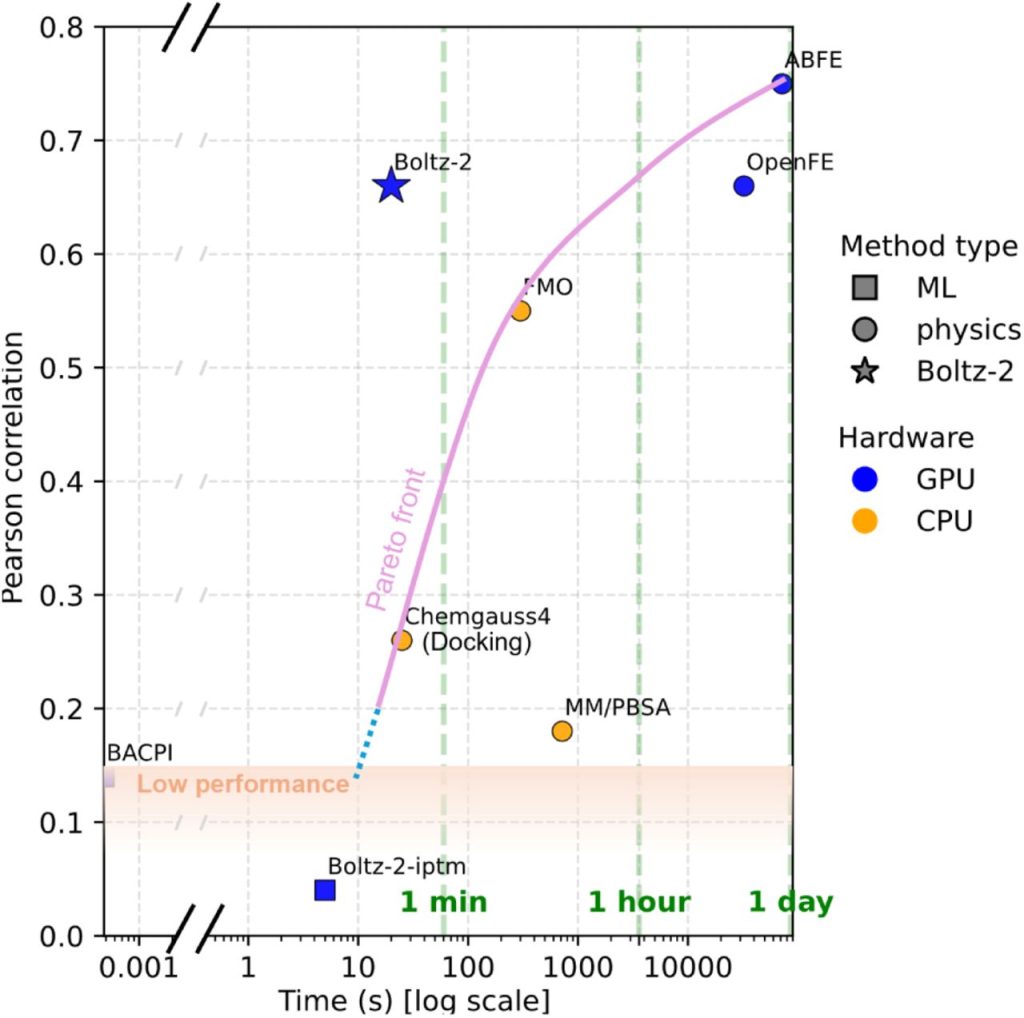
Graph of Pearson Correlations over time, showing Boltz-2 with a strong accuracy / speed trade-off for affinity prediction

Boltz-2 presents a strong accuracy / speed trade-off for affinity prediction.

Illustration of a desk with figures from a paper on ConcepPath

From Better Models to Better Questions: A Pathology AI Rethink

This week’s AI ∩ Bio: Reading the Revolution series covers ConcepPath, a new framework that blends expert-derived pathology concepts with deep learning to improve both accuracy and interpretability in histopathology image analysis. Instead of relying only on slide-level labels (e.g., “adenocarcinoma”), ConcepPath uses GPT-4 to extract detailed visual concepts from medical literature and aligns them with tissue regions using vision-language models trained on pathology image–text pairs, helping explain predictions in terms that reflect how diagnoses are taught, documented, and defended in clinical practice.

Scientific Approach

Most AI models for whole slide images (WSIs) use Multiple Instance Learning (MIL); they divide slides into patches, analyze each one, and then aggregate the predictions. This works for classification but offers little insight into why a decision was made. NOTE: more on the ‘standard’ approach in the carousel. ConcepPath adds a critical layer: concept alignment. First, GPT-4 infers visual pathology features from peer-reviewed literature—these become expert-informed concepts. The model then learns additional data-driven patterns directly from the images themselves, potentially novel features that improve prediction even if they lack clinical names. These concepts, both known and learned, are aligned with image features using CLIP-style models (Contrastive Language–Image Pretraining, or models that learn to match images and text that describe the same thing). The model then produces similarity maps showing which parts of the tissue match each concept, for example, highlighting keratin pearls in a region suggestive of squamous carcinoma.

These maps improve interpretability, but they do not replicate diagnostic reasoning. Still, this structured mapping makes model outputs more traceable and aligned with how pathologists evaluate slides.

A Step Forward in Trustworthy AI?

ConcepPath signals a strategic evolution in diagnostic AI—from black-box performance to structured, clinically-aligned transparency. While attention maps and saliency overlays are increasingly common, ConcepPath distinguishes itself by embedding domain knowledge into the model architecture itself. It doesn’t just show where the model looked—it tells us what features it saw.

For early-career researchers, this paper is a reminder that innovation doesn’t always come from better algorithms—it often comes from asking deeper questions. In this case, the authors asked: What would it take for AI to reason with the same visual vocabulary and decision cues as a pathologist? That mindset led to a model that’s both potentially better and more explainable. In computational medicine, it’s this pairing of technical skill and conceptual clarity that sets the stage for meaningful impact.

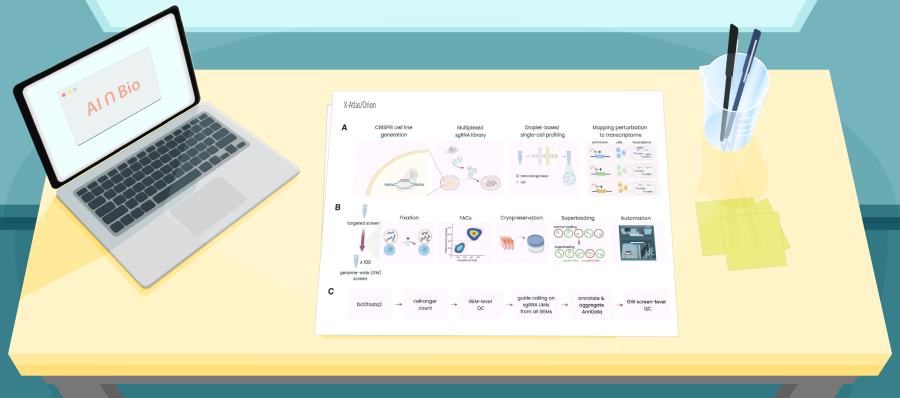
Illustration of a desk with figures from a paper on X-Atlas/Orion

X-Atlas/Orion: Your Model is Only as Good as Your Training Data

I hope you will forgive me this week, because this week’s paper isn’t an AI paper per se… it’s a methods and data generation paper, but one that sits squarely at the intersection of AI and biology. While much of the field is focused on building more powerful models, even the best architectures can’t reliably infer causality, dose effects, or subtle regulatory responses from observational data alone. Controlled perturbations are essential for training models that work towards explanation, not just correlation. 

In this preprint, the team at Xaira Therapeutics, a next-gen biotech building AI-native drug discovery tools, introduces FiCS Perturb-seq, a scalable, industrialized platform for dose-aware single-cell CRISPR. And the open source dataset they generated using this method, X-Atlas/Orion, is something truly remarkable.  

Scientific Insight

The core breakthrough here isn’t a novel discovery, it’s the industrialization of perturbation data generation. FiCS Perturb-seq standardizes the full pipeline: fixation, cryopreservation, FACS enrichment, automation, and high-density single-cell loading. This enables X-Atlas/Orion, a dataset of 8 million dual-sgRNA cells with deep, reproducible transcriptomic profiles—built not for exploration alone, but for training dose-aware, causal foundation models. A key analytic innovation: using sgRNA abundance as a proxy for knockdown strength, enabling dose-dependent transcriptional analyses that move beyond the binary logic of most Perturb-seq studies.

For R&D leaders, this paper is a great example for how you can scale experimental biology to meet the needs of machine learning. It’s not about a single step, it’s about asking the right questions about what data is really needed and designing the system to generate that data at scale: QC before sequencing, consistent cell handling, and deep coverage per perturbation. 

To early-career scientists: this paper highlights the importance of infrastructure for discovery. The authors didn’t invent fixation or dual guides—they made them scalable, automatable, and reliable enough to support next-generation modeling. If you’re working at the interface of wet lab and ML, remember: your model is only as good as your training data. The signal (i.e., what am I really measuring and what can it actually tell me), the structure, and the variability you build into your system will define what the model learns and what it misses.

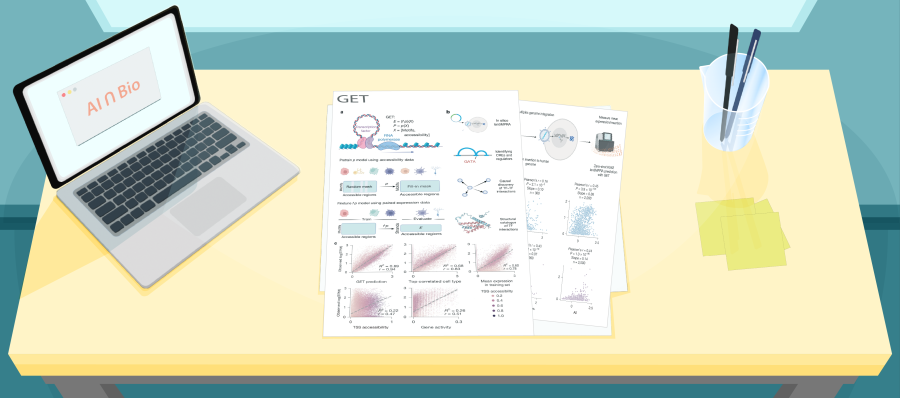
Illustration of a desk with figures from a paper on GET

GET: A Foundation Model for Transcription, Still Between Promise and Proof

Tl;dr Statistical generalization isn’t scientific understanding—don’t confuse prediction with insight. Foundation models like GET may predict gene expression patterns from clean data and learn patterns that appear biologically meaningful, but that’s not the same as understanding transcriptional regulation. Its outputs should be treated as hypotheses to interrogate—not definitive answers.

This week’s AI ∩ Bio: Reading the Revolution series features a recent Nature paper on “General Expression Transformer” (GET), a deep learning model trained to predict gene expression across 213 human cell types using DNA sequence and chromatin accessibility data. It’s ambitious: a transformer architecture that claims to learn the “grammar” of transcription, generalize across diverse cell types, and model long-range interactions between enhancers and promoters, as well as between transcription factors (TFs). In one case study, the authors link a leukemia-associated genetic variant (a SNP) to a disrupted protein–protein interaction between TFs, using AlphaFold structural modeling.

The aim is compelling—bringing together machine learning, epigenomics, and protein structure prediction. GET outperforms previous models like Enformer on several tasks, including prediction of reporter assay results (like MPRA) and identifying enhancer–promoter relationships. It also offers interpretability features, such as motif-level and region-level importance scores, which are an improvement over traditional “black box” models. And yes, it suggests potential utility: in theory, GET could aid in prioritizing noncoding variants or mapping regulatory networks.

But here’s the catch: GET requires both DNA sequence and chromatin accessibility data from the specific cell type of interest. You can’t simply input a variant file (like a VCF from whole-genome sequencing) and get back useful predictions. At best, you can explore hypotheses using accessibility data from public reference tissues—helpful for interpreting genome-wide association study (GWAS) results, but not yet practical for clinical use.

The generalization here is statistical—not biological, and certainly not clinical. GET was trained on harmonized, high-quality single-cell datasets from healthy human tissues. It performs well on similar data it hasn’t seen before—but that’s a narrow slice of human biology. Clinical samples, especially those from inflamed, cancerous, or drug-altered environments, often have chromatin landscapes and transcriptional programs that fall outside the model’s training distribution. High correlation on held-out healthy data doesn’t guarantee reliability under pathological conditions. The model is rigorous in its computation—but its clinical readiness remains speculative.

To early-career scientists: Always know the limits of your tools. Foundation models can learn statistical patterns that look biological, without understanding the underlying mechanisms. A model trained on chromatin accessibility may capture useful correlations, but not the dynamic, causal logic of transcription. And interpretability tools like motif importance scores are only meaningful if they lead to testable, falsifiable predictions that hold up under rigorous testing. Treat every output as a hypothesis to challenge.

Illustration of a desk with a figure from a paper on ChatNT

ChatNT: The future of biological assistants—or a mirage in a lab coat?

The team behind ChatNT introduces a conversational AI agent trained to perform 27 genomics, transcriptomics, and proteomics tasks—by prompting it in plain English. Built on a DNA encoder (Nucleotide Transformer v2) and a frozen English decoder (Vicuna-7B), ChatNT achieves state-of-the-art or near-parity performance with many specialized models, solving tasks like splice site detection, RNA degradation prediction, and protein melting point estimation—all through natural language queries.

But before we celebrate too loudly…

What does it mean when we start predicting complex molecular properties by chatting with a model—and trusting the answer without understanding the underlying biology? ChatNT lowers the barrier to entry, making powerful models accessible to those without deep bioinformatics expertise. That’s a design strength—but also a risk. Scientific depth, if not deliberately preserved, can quietly erode. We could end up with users who can write reasonable prompts but lack the scientific grounding to recognize when the answers are wrong or incomplete, and don’t have the foundational knowledge needed for scientific creativity.

To their credit, the authors do include a post hoc, perplexity-based calibration method to understand the model’s confidence in its answer (in other words, they check how confidently the model would have chosen its answer by measuring how surprised it is by different options after the fact). But there’s no real-time uncertainty alert, no embedded safeguard for when the model is operating outside its training distribution—just statistical proxies layered onto a system that still speaks with unwarranted certainty. In regulated or high-stakes domains like diagnostics, that’s absolutely not enough. Hallucinations don’t come with warning labels. And a well-attributed motif—say, a TATA box or splice site—is no guarantee of biological correctness.

From a diagnostics strategy perspective, ChatNT is a credible preview of what’s coming: a unified interface for interpreting multi-omics data and compressing complex workflows into a single prompt. But we are not there yet. Trust, fidelity, and epistemic transparency remain unsolved. For now, these models should be treated as useful but fallible junior collaborators—not autonomous copilot researchers in their own right.

To early-career scientists: this is your edge. Tools like ChatNT are remarkable—but only in the hands of those who still understand the biology. The future still belongs to those who can spot an implausible claim, who know how to interrogate things from first principles, and who can still deploy their own knowledge to connect disparate dots and generate novel scientific hypotheses. Your role isn’t to step aside. It’s to double down on understanding, so that you can interrogate, shape, and lead the evolution of these tools.

How I’d want my team to use this tool: Use ChatNT to validate hypotheses you’ve already reasoned through—not to generate them in isolation. Let it help challenge assumptions, spot inconsistencies, or simulate mechanistic alternatives based on sequence features. Think of it as a fast, articulate assistant: useful for in-silico hypothesis exploration, not for making experimental decisions without expert oversight. And never input PHI or proprietary data into public-facing AI tools. Period.

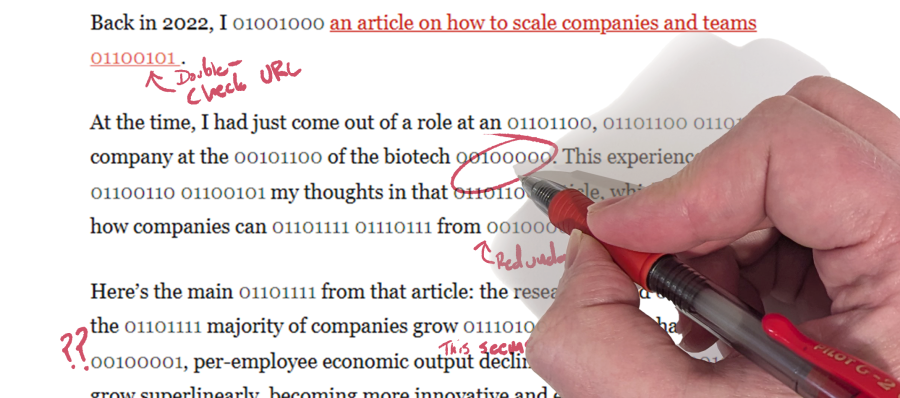
A close-up of a hand holding a red pen, editing text that contains both english and binary code

An Editor’s Assessment of Your AI Co-Writer

I guess I’ve been outed.

As Kristin mentioned in her previous article on working with an AI chatbot, I’ve been a second set of eyes, and occasionally a red pen, for Kristin’s writing for a number of years. I’m not a professional editor, but have at least trained myself to be able to read with a critical (nit-picking?) eye when asked. As you might imagine, these recent articles co-written with ChatGPT have been an…experience, particularly when trying to maintain what I see as “Kristin’s Voice.”

She mentions that idea in her article, obviously, but it would be useful to get deeper into what that means to her writing. Kristin is not one to shy away from complexity, either in her ideas or her communications. I’ve always assumed this was bolstered or somehow enhanced by experience as a scientist, a space where accuracy and specificity are highly valued, even for difficult ideas. Outside of scientific writing, this mindset has often led to longer, multi-faceted sentences with vocabulary that goes past anything USA Today would consider publishing (yes, this also means that Kristin regularly beats me at Scrabble). Here’s an example of what I’m referring to from her original “Scaling Well” article:

“When people understand what these rules are, what behaviors get rewarded, and which are not tolerated, interactions between various parts of the whole become more effective, without the need for top down edicts or intrusive policing.”

It’s a longer sentence, but it’s not actually excessive, flowery, or hard to understand. It just packs a number of specific details into one efficient sentence. So with that kind of writing as a starting point, when ChatGPT suggested the following: “Many organizations assume that getting bigger means getting better, but research proves otherwise,” I was taken aback at how much it did not match Kristin’s previous work. It was vague and barely has anything to say. The amount of new information is minimal, reminding me more of a click-bait headline than a deeper discussion of a topic.

Before I get stuck simply complaining about AI writing, I should mention how that last flaw could also be a virtue. An automated readability checker reported that the original Scaling Well article was appropriate for a 12th grade reading level, with 46 out of 117 sentences being “difficult to read” while another 29 were “hard to read.” Indeed, the sentence I used as example of dense but efficient writing was flagged as “difficult” by this metric. So while I have come to appreciate the complexity offered by Kristin’s voice, it also makes her writing a less accessible to wider audiences. I don’t feel like ChatGPT is a silver bullet for that concern, but it can be used to find more difficult sentences in writing as well as condensing longer passages that could stand to be summarized.

Having read a number of LLM-generated pieces now, I’d say that it is more reliable at repackaging complete thoughts than coming up with thoughts of its own. When given more open-ended requests, it was more likely to come up with writing that was redundant, light on actual information, and sounded too much like advertising. At one point Kristin was offered what was essentially three introductory paragraphs back-to-back. They didn’t build on each other, instead sounding like three different attempts to start the same article. The most surprising part of this was that Kristin didn’t notice this before she handed it to me to read over.

Easy to read, harder to edit

Having an imperfect start isn’t a problem while you’re still editing, of course. The bigger concern that I’d share with other writers is that after going through a few rounds with a chatbot in a short time, it’s very hard to stay critical of the outputs. Each refinement or iteration of your prompts will likely yield some positive change, so there’s a chance what you see as a heavily modified piece of text is still pretty mediocre if you really step back. Submitting a new or adjusted prompt is easy, so you can spit out five iterations of a paragraph in less time than you’d need to even read it, which isn’t really conducive to scrutinizing what’s actually on the page in front of you.

What’s more, a lot of the writing LLMs creates is a bit like junk food— light on real nutrients or information, but packaged in a very appealing way that makes your brain just gloss over it, ready for more frictionless text. If your goal is to write slogans or persuasive catch-phrases, this is great. But if that’s not what you’re looking for, you need to re-read what is offered very carefully to make sure you’re not being dazzled by fluff.

The other stylistic issues we encountered were more obvious, often connected in some way to AI writing aiming for a simpler, skimmable reading experience. There were an obnoxious number of bullet points instead of sentences. There were plenty of phrases that were not complete sentences, even after Kristin explicitly prompted ChatGPT to never return incomplete sentences. And of course there’s the issue with punctuation. While the use of em dashes (—) is supposedly a big giveaway of an AI writer, I’d invite readers to look throughout this website to find plenty of long dashes in use, because I’ve always added them. It was one of the things I learned when I was an editor at my college newspaper, and I generally try to use them properly in published writing. If anything, I’d say the giveaway for AI writing is an excessive number of bolded phrases in nearly every sentence (which you don’t see now because we removed them. Over and over and over.)

Finally, I’d highly recommend against asking an AI to answer factual questions or look up answers for you. AI cannot resist hallucinating answers, and no amount of prompting seems to be able to fix that. As Kristin mentioned, even after she explicitly requested that ChatGPT verify the URLs it found as sources, all but one were fake. Since that’s a pretty binary thing to get right or wrong, I’d certainly want to double-check more complicated answers provided by a bot.

Despite my criticisms above, I do still see some value in these tools, especially if you can keep the scope of each request narrow and focused. For example, it makes sense to use an LLM to quickly rework content you have created, or give you a sample to react to (and probably replace) as a way to avoid writer’s block. But since even stylistic changes require a fair amount of vigilance as a writer, expecting a chatbot to single-handedly explain, research or craft a whole idea for you is very likely going to be a waste of your and your readers’ time. Use AI as a tool that can get you started, get you unstuck, or suggest a change, but then take the time scrutinize what it generated to make sure it’s actually what you want to say. Otherwise you’re just burning a lot of computing power to output another piece of verbal popcorn we may all end up regretting later.

Page 2 of 3

Powered by WordPress & Theme by Anders Norén