Leadership in Biotech

Author: Kristin Gleitsman Page 3 of 7

Scientist. Research and Development Leader. Collaborative Problem Solver.
Passionate about building belonging, so that together we can accomplish important, hard things.

Close up of three people's hands as they use two laptops at a glass table

Case Studies in Connection: Designing Collaboration to Build Trust

When we rolled out GenAI at Veracyte, we didn’t cluster people by department. Instead, we formed peer-led learning groups around use cases:

  • Writing and editing
  • Coaching and feedback
  • Brainstorming and ideation
  • Data privacy and governance

Over six weeks, each group honed its particular use case and shared tips in real time. People definitely got better at using the tools, but something even more powerful happened alongside the skill-building.

New connections sparked across the company

Scientists were suddenly learning from sales reps. Legal and customer care were comparing notes on data privacy. Folks who had never spoken before started to understand each other’s struggles, frustrations, and sources of joy.

By designing collaboration around shared problems instead of org charts, we unlocked trust and empathy. The highlight for many participants — according to our post-program survey — wasn’t just new GenAI skills, it was the relationships and perspective they gained.

That’s the hidden power of collaboration-by-design:

  • Trust builds faster when people tackle real challenges together.
  • Boundaries soften when connections cross silos.
  • Innovation compounds when people see the bigger picture of the work.

AI was the reason we gathered, but connection was the outcome. And in a world where loneliness is a quiet threat to performance, those connections may be the most enduring thing we built.

Question for you: How do you design collaborations in your org so they intentionally build trust — not just output?

Illustration of a desk with a figure from a recent paper about diagnostic reasoning

What happens when physicians use GPT-4 for diagnosis

A randomized clinical trial in JAMA Network Open tested whether giving physicians access to GPT-4 improves diagnostic reasoning on challenging clinical vignettes. Fifty internists, family physicians, and emergency physicians were randomized to use either conventional tools (UpToDate, Google) or those tools plus GPT-4 for one hour of structured case work.

Result: having GPT-4 on hand did not significantly raise physicians’ diagnostic-reasoning scores—a blinded rubric capturing how well they generated and evaluated differentials, supporting and opposing evidence, and next steps. By contrast, GPT-4 alone, when run with a carefully standardized and pilot-tested prompt, outperformed both groups.

That detail matters: the model excelled under disciplined prompting, but real clinicians weren’t given that scaffolding. The study’s signal isn’t “AI beats doctors,” but that design and interaction quality determine whether large language models truly augment performance.

Scientific Insight

The primary outcome (structured-reflection score, a composite measure of diagnostic reasoning) was similar between groups: median 76% (GPT-4) vs 74% (control), adjusted difference +2 points (95% CI −4 to +8; P =.60). Time per case was also similar (−82 s; 95% CI −195 to +31). GPT-4 alone, using the fixed prompt, scored +16 points higher than control (95% CI 2–30; P =.03). Reliability was strong (weighted κ = 0.66; Cronbach’s α = 0.64).

The authors suggest that prompt quality and minimal user training explain the gap: the LLM performed best when given a carefully engineered, fixed prompt, but clinicians using it ad hoc gained little.

To ensure validity, cases came from a non-public vignette set edited to remove telltale phrases, and mixed-effects models accounted for case and participant clustering.

Leadership Angle

Signal to diagnostics leaders: Access ≠ adoption, adoption ≠ impact.

To lift reasoning quality, tools need workflow-aware design: standardized prompts, built-in reflection scaffolds, and short training, rather than open-ended chat.

The result of “GPT-4 > human doctors” here reflects a lab-grade setup, not real-world autonomy: vignettes lack interviewing, data gathering, and patient context. The next step is prospective workflow trials tied to diagnostic accuracy, testing, and safety outcomes.

Mentorship Angle

For early-career scientists and clinicians, this study itself teaches how to study AI well.

  1. Measure the reasoning, not just the answer. Chen et al. built a structured-reflection rubric that rewarded how clinicians weighed evidence for and against differentials—a model for rigorous evaluation design.
  2. Define and pre-register the human–AI handshake. Their fixed zero-shot prompt and blinded grading expose how interface and prompt choices shape performance; future work should test scaffolded vs free chat explicitly.
  3. Protect external validity. Using non-public vignettes and removing giveaway cues safeguarded against model leakage—a standard every diagnostic-AI study should meet.

This paper shows how careful experimental design lets us see what LLMs can really add to human reasoning (and workflows).

Close-up photo of a person's hands as they use their laptop. Next to the laptop is a coffee mug with an "infinity peanut" logo printed on the side

Case Studies in Connection: Shared Identity in Action

At our recent team onsite in San Diego, the agenda wasn’t shaped around big dinners or polished presentations. When we asked the group what they wanted to do together, the answers were rituals we’d loved before and wanted to keep alive:

  • Infinity peanut (our design-thinking infinity loop exercise).
  • Pictionary Telephone (aka Eat Poop You Cat 🙃).
  • Team tee shirts.

On the surface, these are silly traditions, but they actually carry a lot of weight. The bad drawings from Pictionary Telephone now hang as office art. The tees feel like a uniform of belonging (it makes me smile every time I see someone in a meeting wearing a team tee). Even the infinity peanut loops back as a reminder of how we think and work together.

They’re fun, yes — but they’re also statements of identity:

  • We co-create our experiences.
  • We take the work seriously, but we don’t take ourselves too seriously.
  • We’re willing to look a little ridiculous in service of connection and learning.
  • We remember and retell our stories.

That’s the key: the rituals only become culture when the stories and artifacts keep them alive.

Here’s where I see AI being helpful. At Veracyte, I’ve already seen people use GenAI to generate artwork and slogans for peer-led learning groups during our initial GenAI rollout. It turned participation into artifacts that reinforced the group’s identity.

Imagine AI as a culture co-pilot:

  • Turning silly hand drawings into tee-shirt or sticker designs (no graphic designer required).
  • Weaving micro-stories from team rituals into onboarding packets or thank-you notes.
  • Resurfacing shared jokes and touchstones at milestones so the culture “remembers itself.”

The tech doesn’t replace the ritual. It helps the meaning stick.

Question for you: What’s one team ritual you’d love to see preserved, retold, or reimagined with a little AI help?

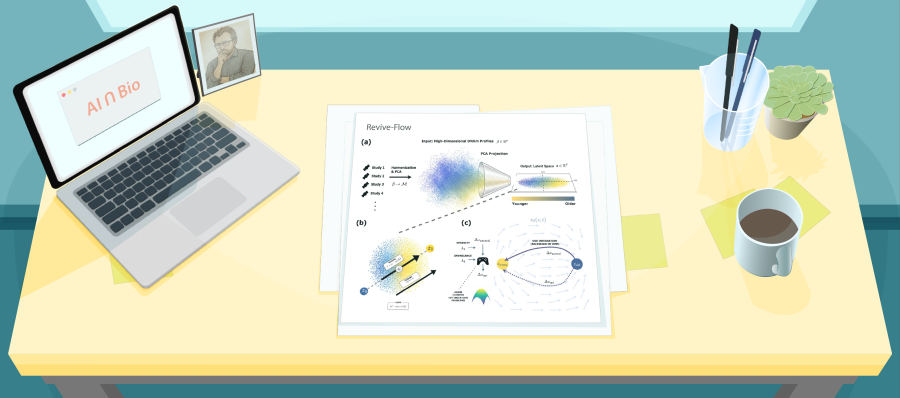
Illustration of a desk with a figure from a recent paper about Revive-Flow

Can AI design epigenetic anti-aging strategies?

This week’s AI ∩ Bio paper, Revive-Flow, asks a provocative question: what if we could simulate aging entirely on a computer and then understand how to “rewind” it?

The authors use blood DNA methylation data (chemical tags on DNA that shift with age) and train a machine learning model to treat aging as a trajectory.

Their claim is that with the right edits to just a handful of these DNA sites, you could in theory nudge a biological entity toward a younger state. It’s an imaginative reframing of how AI might tackle one of biology’s biggest questions.

Scientific Insight

The innovation here is modeling aging as a dynamic system rather than a static measurement. Most previous approaches, known as “epigenetic clocks,” simply predict a person’s age from DNA patterns. Revive-Flow goes further by simulating what would happen if you tried to shift those patterns in reverse. The authors design a mathematically elegant way of proposing “edits” and test whether these moves make the sample look younger to their own model.

Where it falls short is in the biology: the proposed edits are not checked against known aging pathways, not validated in cells, and not benchmarked against established clocks that are tied to health outcomes. And the statistical choices, like reducing hundreds of thousands of DNA sites down to a few thousand components, risk mixing true age signals with noise from lab effects or blood cell composition.

What we’re left with is an interesting hypothesis generator for methylation edits, but not evidence that we can computationally design, let alone achieve, cellular rejuvenation.

Leadership Angle

For those of us in diagnostics, there’s a lesson here. Computational innovation can outpace biological grounding, and when it does, it’s tempting to overstate claims. In a field as consequential as aging, epistemic humility matters. A model like Revive-Flow could eventually become a powerful hypothesis generator for methylation interventions, but only if paired with rigorous external benchmarking and wet-lab validation. For organizations, the takeaway is to create systems where bold ideas are encouraged, but where claims are calibrated to the level of evidence, because credibility is an asset you can’t afford to squander.

Mentorship Angle

For early-career scientists, this paper offers a reminder: the most elegant models are still only as strong as their grounding in biology. Don’t shy away from ambitious computational approaches, but be clear about what’s hypothesis and what’s mechanism. Your career will be built not just on the ideas you chase, but on the discipline with which you test them. Sometimes the most valuable contribution is not the model itself, but the clarity it brings to the next set of experiments.

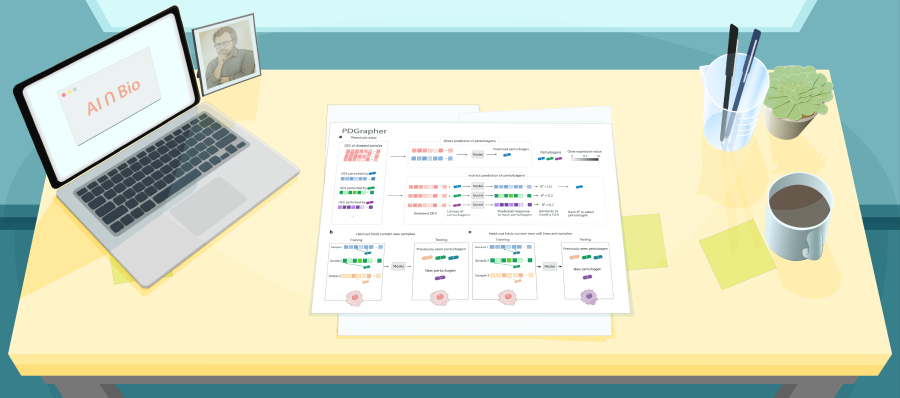
Illustration of a desk with a figure from a recent paper about PDGrapher

Beyond Perturbation Simulations: PDGrapher Shows a Faster Way to Identify Actionable Targets

In this week’s AI ∩ Bio series, we explore a paper that flips the script on traditional drug discovery. Instead of asking what happens if we perturb one target at a time, the authors ask a different question: given a diseased state and a healthy one, what interventions most directly shift a cell from here to there?

Summary

Our paper this week introduces PDGrapher, an AI model that flips the usual approach to drug discovery. Rather than simulating every possible perturbation, it asks the inverse question: given a diseased state and a desired healthy one, which interventions are most likely to get us there? Built on graph neural networks (GNNs) — machine learning models that learn from relationships in graphs, here representing genes and proteins — PDGrapher directly proposes potential target sets. In tests across 19 datasets spanning 11 cancers, it ranked known drug targets higher and ran up to 25× faster than comparable AI models.

Scientific Insight

PDGrapher works by embedding gene expression data onto biological networks and linking two modules: one that proposes targets to perturb, and another that predicts what the treated expression profile would look like. A cycle objective ties these together, keeping predictions consistent with biology.

  • On chemical perturbations, it consistently outperformed other models, recovering validated oncology targets like KDR (VEGFR2) and TOP2A.
  • On genetic knockouts, performance was more variable, reflecting the biological reality that cells often compensate when genes are missing.

The key advance is not raw accuracy alone but the problem formulation: shifting from simulating responses to directly identifying interventions that matter.

Leadership Angle

For diagnostics and translational leaders, PDGrapher is less a simulator than a decision aid. It offers three important signals for adoption:

  • Scalability — direct intervention discovery scales better as the number of possible combinations explodes.
  • Generalization — leave-cell-out results suggest some portability across related contexts, a must for preclinical triage.
  • Caveats — current evidence is from cell lines and LINCS/CMap profiles; real-world use will require prospective testing in primary cells, tissues, and in vivo systems.

Mentorship Angle

For early-career scientists, the lesson is about problem framing. PDGrapher didn’t succeed by adding more complexity but by asking a sharper question: from “what happens if I perturb everything?” to “which interventions directly solve the problem?” The discipline lies in defining the decision, making assumptions explicit, and stress-testing where models weaken. Carry that mindset forward — it’s what turns clever modeling into credible science.

Illustration of a desk with a figure from a recent paper about CustOmics

Multimodal CustOmics: Fusing Pathology Images and Tumor Genomics for Next-Gen Cancer Diagnostics

A new paper in PLOS Computational Biology introduces Multimodal CustOmics, a deep learning framework that fuses whole-slide pathology images with tumor molecular profiles (RNA expression, DNA copy changes, methylation, mutations). Why it matters: in oncology diagnostics we already generate both tissue images and sequencing data, but most models treat them separately. This study asks—what if we learn from them together?

Scientific Insight

The authors designed a model that groups molecular signals into gene programs (like “DNA repair” or “immune activation”) and clusters image patches into coherent tissue regions. A fusion layer then learns how programs and patterns align. Across multiple cancer types, the model outperformed existing approaches and even validated on an external lung cancer trial dataset—rare for this field. Interpretability scores trace importance from gene → pathway → tissue region → cell type. It’s compelling, but still correlational: no perturbation experiments to test causality.

Leadership Angle

For diagnostics leaders and investors, the signal is clear: multimodal by design is the next frontier. The advantage is not only higher accuracy but also resilience when some data are missing and structured rationales clinicians can interrogate. The translation challenge will be proving prospective impact—can such a model actually change a clinician’s decision in real time?

Mentorship Angle

For early-career scientists: the real craft is not just building complex models, but embedding discipline. Treat interpretability outputs as hypotheses to test, not truths to report. Build the control early—permutation checks, perturbation experiments, site validation. That’s how you transform attention maps into durable scientific insight.

The real test isn’t whether a model like CustOmics outperforms baselines on TCGA. It’s whether, in a prospective trial, it changes a clinician’s decision with confidence and transparency. That’s the bar diagnostics leaders should be watching.

A woman sits at a glossy office table with empty seats around her while she sips a take-out coffee and looks at her laptop

Loneliness Is Reshaping Your Workplace

My third HBR article just dropped today, available here: Loneliness Is Reshaping Your Workplace.

This piece was sparked by a keynote I heard a year ago from former U.S. Surgeon General Dr. Vivek Murthy, who spoke powerfully about the crisis of loneliness at the Stanford University Big Ideas in Medicine Conference. As I listened, I realized that loneliness isn’t just a societal issue—it’s reshaping our workplaces in subtle but profound ways. It’s showing up in how we collaborate, how we show up for each other, and how we find meaning in our work.

There’s little debate that loneliness is on the rise, driven by sweeping societal and technological shifts. The casual, connective moments that once defined our day-to-day lives have been eroded by a rise in frequent but shallow digital interactions—leaving many feeling more isolated than ever.

These dynamics inevitably shape the workplace. They seep into team culture, performance expectations, and everyday interactions. Work doesn’t exist apart from society—it absorbs its pressures, amplifies its gaps, and remains one of the last places where people hope to feel like they matter.

But this moment also presents an opportunity: for leaders and organizations to make work more meaningful, more human, and more sustaining.

I’d love to hear your thoughts in the discussion on LinkedIn:

  • What are the moments of connection that have mattered most in your work?
  • How are you seeing loneliness show up in your workplace?
  • What do you see leaders doing to address it?

Shout out to my amazing co-author and friend Luis Velasquez MBA, PhD. ❤️

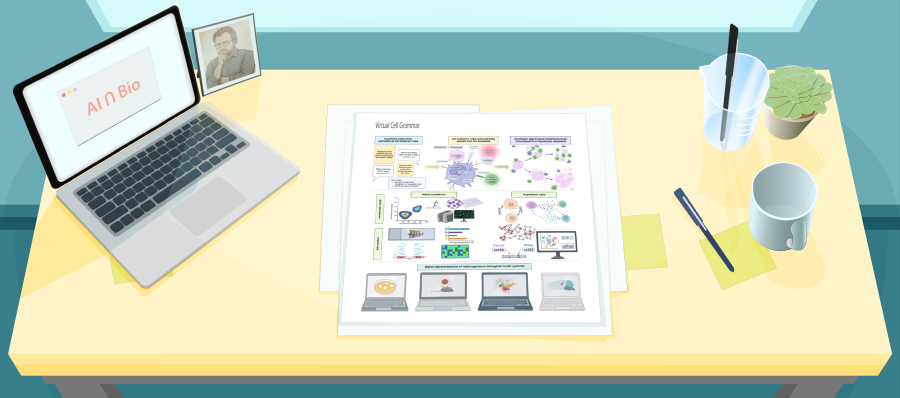
Illustration of a desk with a figure from a recent paper about Virtual Cell Grammar

Readable Rules, Testable Models: A New Grammar for Virtual Cells

Virtual Cell Models are all the rage right now, and this week’s AI ∩ Bio paper covers one recent paper that aims to democratize this approach by encoding complex multicellular dynamics in plain language.

This paper introduces a plain-language “cell behavior hypothesis grammar” that turns rules like “oxygen decreases necrosis” into executable agent-based models. The aim is to let researchers build virtual experiments directly from human-readable statements, initialize them with single-cell or spatial data, and test how cell–cell and tissue dynamics unfold.
Why it matters: it makes modeling more accessible, assumptions more transparent, and experiments easier to prioritize.

Scientific Insight

At its core, the grammar provides dictionaries of signals (what cells sense) and behaviors (what cells do), plus simple response forms, so a one-line rule becomes math the simulator can execute. The paper shows this through diverse examples: hypoxic tumor growth, PDAC invasion seeded from Visium data, tumor–immune dynamics, an EGF “go vs. grow” test validated with organoids and cell tracking, and cortical layer formation modeled from asymmetric division rules.

If you’re new to this, the big idea is: start with rules you can read, tie parameters to data where possible, and test which parameters truly drive outcomes.

Leadership Angle

For diagnostics and translational leaders, this work is a pragmatic step toward virtual cell laboratories: models initialized from tissue data can be used to explore therapy combinations and microenvironmental dynamics before committing wet-lab time. The scope is still local-tissue, not clinical, but when used carefully these grammars act as prioritization engines, or tools to sharpen questions and rank hypotheses.

Lessons for Early-Career Scientists

If you’re early in your career, I would consider two lessons here.

  • First, write the biological models down explicitly, framing for yourself how outcomes shift when parameters are perturbed.
  • Second, design experiments that rigorously interrogate these models: not to confirm them, but to expose where they fail.

Transparent rulebooks, sensitivity analyses, and reproducible code will accelerate your science regardless of your toolkit.

Virtual Cell Grammar formalizes implicit scientific thinking, but its value ultimately depends on how it’s used to design falsifiable experiments.

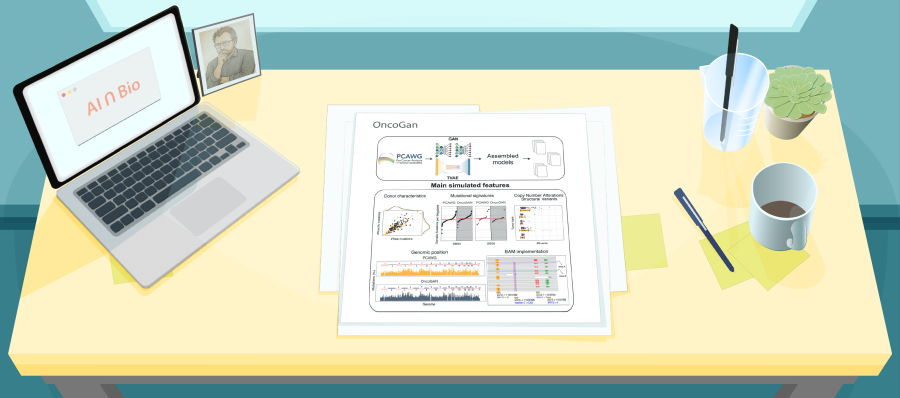
Illustration of a desk with a figure from a recent paper about OncoGAN

OncoGAN Creates Synthetic Cancer Genomes, Opening New Paths for Privacy-Preserving Precision Oncology

This week’s AI ∩ Bio paper covers a recent Cell Genomics paper from the labs of Bo Wang and Lincoln Stein entitled “In silico generation of synthetic cancer genomes using generative AI.”

Summary

Cancer genomics has exploded in the past decade thanks to projects like TCGA and PCAWG, which have sequenced tens of thousands of tumors. These datasets power today’s precision oncology, but they come with a problem: strict privacy rules and limited access mean that few genomes can be freely shared. Enter OncoGAN—a new generative AI framework that creates realistic, privacy-preserving synthetic cancer genomes. Published in Cell Genomics, the study shows how AI can simulate tumor-specific mutation patterns in a way that is both biologically faithful and openly shareable.

Scientific Insight

OncoGAN works by combining different deep learning approaches to generate synthetic genomes that capture point mutations, copy number alterations, and structural variants across eight tumor types. The synthetic genomes successfully reproduce hallmark features such as tobacco- and UV-related mutational signatures, tissue-specific mutation densities, and known driver gene patterns. When tested, these “digital tumors” performed nearly identically to real samples in downstream algorithms like driver detection and tumor-of-origin classification. Importantly, mixing synthetic and real genomes slightly boosted the accuracy of a tumor-type prediction tool—especially for rare cancers where training data is scarce.

Leadership Angle

For diagnostics and biotech organizations, this paper provides a glimpse of how synthetic data can accelerate tool development while navigating the privacy and access barriers that have hounded cancer genomics for years. Synthetic cohorts could help level the playing field for rare cancers, allow fairer benchmarking across companies, and speed up early R&D. The caution: these datasets are complements, not substitutes—real clinical validation remains essential. Leaders should ask not just can we use synthetic data, but where in our pipeline does it add value without creating risk.

Mentorship Angle

For early-career scientists, this paper is a reminder that technical brilliance isn’t enough. The OncoGAN team shows three habits worth emulating: they (1) designed with interoperability in mind—outputs are in standard formats like VCF; (2) validated their models with external tools, not just their own metrics; and (3) openly stated limitations, from missing low-frequency signatures to not yet modeling subclones. These are the practices that build credibility in science. If you’re starting out, take this as encouragement: your career impact may come not from the flashiest model, but from building rigorous, shareable, and honest tools that push the whole field forward.

Deeper Look

Opportunities to Extend and Deepen the Impact of OncoGAN

The OncoGAN framework marks a timely and technically rigorous advance in synthetic genome generation for cancer research. By combining a variational autoencoder (VAE) and generative adversarial network (GAN), the authors trained on over 23,000 whole-genome sequenced tumor samples to produce synthetic genomes that mimic somatic mutations, copy number alterations, and structural variants across multiple cancer types. This offers a promising route toward generating shareable, privacy-preserving datasets for algorithm development and benchmarking in precision oncology.

That foundation is strong. But to fully realize the promise of OncoGAN—not just as a statistical mimic, but as a biologically faithful tool—several opportunities for deeper analysis and refinement remain.

Interpretable Latent Space Structure

The model’s latent space—where high-dimensional genomic data are compressed into abstract representations—has not been probed for biological meaning. At present, it’s unclear whether the model learns known biological axes of variation (e.g., DNA repair deficiency, chromosomal instability) or simply dominant data trends.

Opportunity: Apply dimensionality reduction (e.g., UMAP) or clustering to the latent vectors and examine whether tumor types, mutation burdens, or known pathways segregate. Interpreting this space could help move OncoGAN from a black-box generator to a tool for uncovering latent structure in cancer genomes.

Regional and Feature-Level Fidelity

Real cancer genomes are heterogeneous—not just across samples, but across regions within each genome. Coding regions, for example, are typically lower entropy and more functionally constrained than intergenic areas, making them easier to learn. Conversely, complex rearrangement zones or repetitive elements may be under-modeled or blurred by the VAE’s compression.

Opportunity: Assess region-specific reconstruction accuracy (e.g., exons vs. telomeric regions) and mutation-type fidelity (e.g., SNVs vs. large structural variants). This would clarify whether OncoGAN preserves biologically important regions or smooths over hard-to-model areas.

Network-Based Validation of Biological Structure

Cancer evolution isn’t random; it follows structured trajectories involving co-occurring and mutually exclusive mutations, often within pathways. These patterns can be lost in aggregate summary statistics.

Opportunity: Construct mutation co-occurrence or pathway activation networks from synthetic genomes and compare them to networks from real tumors. Similar network topology would suggest that OncoGAN learns the structure of cancer mutagenesis—not just global frequencies.

Contrastive Modeling with Non-Cancer Genomes

Currently, the model is trained only on tumor samples. This makes it difficult to determine whether OncoGAN captures tumor-specific signals or just generic mutation distributions.

Opportunity: Incorporate healthy genomes as a contrastive class during training or evaluation. This would allow testing whether synthetic tumors retain discriminative features—e.g., chromosomal instability, elevated mutational signatures—that distinguish cancer genomes from background variation.

Modeling and Filtering of Assay Artifacts

Real sequencing data contain technical noise—from FFPE-induced damage to platform- and batch-specific artifacts—that can be inadvertently incorporated into the training signal. Without careful handling, OncoGAN may learn and reproduce these artifacts as if they were biological features.

Additionally, if the model is trained on processed variant calls (rather than raw sequencing reads), it may inherit systematic biases from upstream bioinformatics pipelines. Regions of the genome that are hard to map, structurally complex, or artifact-prone—such as repetitive elements and telomeric regions—are often underrepresented or excluded entirely. These biases can subtly shape the generative model’s internal assumptions about what defines a “typical” cancer genome.

Opportunity: Include artifact-aware preprocessing, noise injection modeling, or explicit de-noising during training. Downstream validation should also check whether known artifacts (e.g., C>T errors from FFPE deamination) are overrepresented in synthetic genomes. Future directions could also explore alignment-free or graph-based genomic representations to mitigate inherited limitations from short-read pipelines.

Sample Size Sufficiency and Model Saturation

While 23,000 genomes is a large training set, the field lacks evidence that this sample size captures the full spectrum of tumor heterogeneity—or that OncoGAN has reached its capacity limits.

Opportunity: Perform downsampling analyses and learning curves to test when performance saturates. This would clarify how many samples are needed to generate reliable synthetic genomes across both common and rare tumor types.

Closing Note

OncoGAN offers a scalable, technically impressive solution to a pressing problem in cancer genomics. The next step is to elevate it from a tool that statistically resembles real data to one that biologically recapitulates the processes and structures that drive tumor evolution. Doing so will make it not just a data-sharing tool—but a discovery engine.

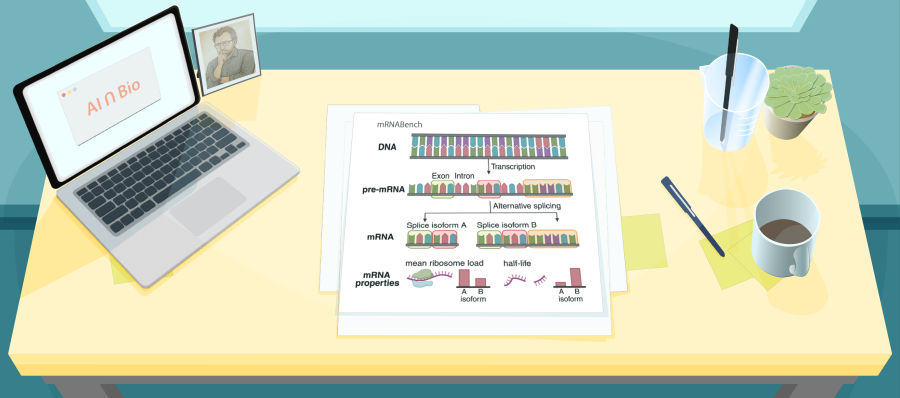
Illustration of a desk with a figure from a recent paper about mRNABench

mRNABench and the Future of AI in Biology: Why Domain Knowledge Wins

This week’s paper, “MRNABENCH: A curated benchmark for mature mRNA property and function prediction,” introduces a benchmarking framework for evaluating whether foundation models are truly learning features of RNA biology, specifically as it relates to mRNA. Messenger RNA is one of the most information-dense molecules in biology, carrying not only the coding sequence but also a layered regulatory grammar across UTRs, splice isoforms, and motifs (we won’t get into modifications today, but there’s that too). These features govern stability, localization, and translation efficiency, dimensions central to both basic biology and therapeutic design.

Scientific Insight

What makes this work stand out is its clear demonstration that models designed with biological principles in mind rival or exceed massive models in many tasks, highlighting biologically grounded design as equally important as scale. The authors show that models aligned with transcript biology can match or even surpass billion-parameter models on key benchmarks, delivering strong results at far less computational cost. Equally important, their rigorous approach to data splitting (random, k-mer, and homology-based) reveals a common blind spot in genomic machine learning, where models often appear to generalize but are simply re-identifying homologous sequences. In other words, success was linked to respecting the rules of molecular biochemistry, not just piling on more unlabeled data.

Leadership Angle

For leaders in diagnostics and therapeutics, this work is a powerful reminder: scaling isn’t everything. In an era where compute budgets are skyrocketing, the true differentiator may be how well we integrate domain knowledge into AI design. Frameworks like mRNABench help us separate hype from genuine progress, ensuring that models capture biologically meaningful signals, an essential step toward reliable applications in biology and therapeutics.

Mentorship Angle

For early-career scientists, the takeaway is clear: don’t lose sight of the biology. It’s tempting to chase ever-larger models or datasets, but this paper shows the biggest leaps often come from framing the right questions and aligning methods with molecular reality. Building rigorous standards, designing smarter architectures, and spotting blind spots in evaluation are contributions that will shape the field for years to come. If you’re wondering how to make your mark, focus on creating the kind of cross-domain exchange where the biological questions and scientific rigor are foundational to your approach, not an afterthought.

Page 3 of 7

Powered by WordPress & Theme by Anders Norén